What AI asks of your resilience
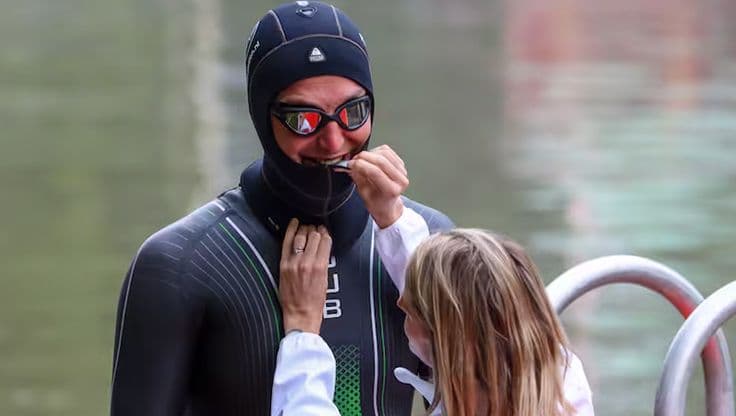
AI is changing fast in many organisations. It writes texts, sums up meetings, answers customer questions. It is moving quickly, and no one knows exactly where it ends. That makes people uneasy. I recognise that unease. Not from computers, but from open water.
I also know what it is like to start with a new tool while others already know how to use it. When I started at Unilever in 2009, a colleague explained how to add things up in Excel. A few months later, I was building charts in it myself.
You cannot see the finish
In the Elfstedentocht, you swim 200 kilometres through Friesland. From the start, you cannot see the finish. You do not know what the water will be like tomorrow, how your body will react, or what will go wrong along the way. In 2018, I did not reach the finish. In 2019, I did.
The difference was not more willpower. I slept more, ate more, and we chose a month with shorter nights. And I broke the distance down. To the next bridge. To the next drink moment. To the next stroke.
It is no different with AI. No one can tell you what your work will look like in five years. If you wait for that, you stand still. What you can do is choose the next small step. One task where you try it out. One meeting where you look at it together. One agreement about what you do and do not leave to a system.
Setbacks are part of it, so talk about them
During the organisation of the Elfstedentochten, something went wrong almost every day. A week before the first swim, the council threatened to cancel everything, because parts would be missing. I tried to judge as little as possible, because everyone was doing their very best. We looked for the next logical step. That applies to every big change, and AI is one of them.
People will make mistakes with these new tools. A summary that is just not quite right. An answer that is too certain. A task that takes longer instead of shorter. If that can be reported without anyone feeling ashamed, the whole team learns from it. If it is hidden, everyone swims on their own.
After 2018, I also had to look honestly at what had gone wrong. Not to find someone to blame, but to do it differently next time. No one asked me accusingly why it had not worked. That was exactly why I dared to try again a year later, with a more professional organisation.
What a machine will not swim for you
During the Elfstedentocht, I swam, but I did not do it alone. There was a team around me, and people on the bank who cared. In 2018, a few farmers from Friesland heard how hard the first night in the dark had been for me. The second night, they drove out on their own with their tractors along the water and shone lights for me.
AI can take over a lot of work. It cannot give you the feeling that someone is standing next to you. Trust, attention and honestly saying how you are doing are still human work. The more gets automated, the more important that part becomes.
Keeping going is not the same as being stubborn
Resilience does not mean smashing through everything. In 2018, I did not reach the finish, and accepting that was also a form of resilience. A year later, I came back with what I had learned.
Before halfway, I already wanted to stop. I was in a lot of pain and felt like I was making a fuss, but I kept swimming. After 163 kilometres, the doctor on board decided it was no longer medically responsible: "Maarten, this is your finish." That is how we had agreed it, because I did not know whether I would recognise my own limit. At first it felt like failure, but mainly I felt relief. I had given everything.
I see two traps with AI. One group keeps stubbornly going in the old way and hopes it will blow over. The other group keeps stubbornly going with every new tool, even when it adds nothing. The resilient group looks at what works, adjusts what does not work, and dares to stop what has no point.
What I do with this in my talks
After the second Elfstedentocht, I wrote down five lessons for my talks. Failing was my best learning moment. Get your organisation right before you start. Know why you are doing it. Being kind to yourself gives you the energy to try again. And dare to stop in time.
My story is not about technology. It is about keeping going when you do not know how it will end. That is exactly where many people are now. If you want to make this theme discussable in your organisation, that can be in a keynote or as a talk tailored to your own issue.