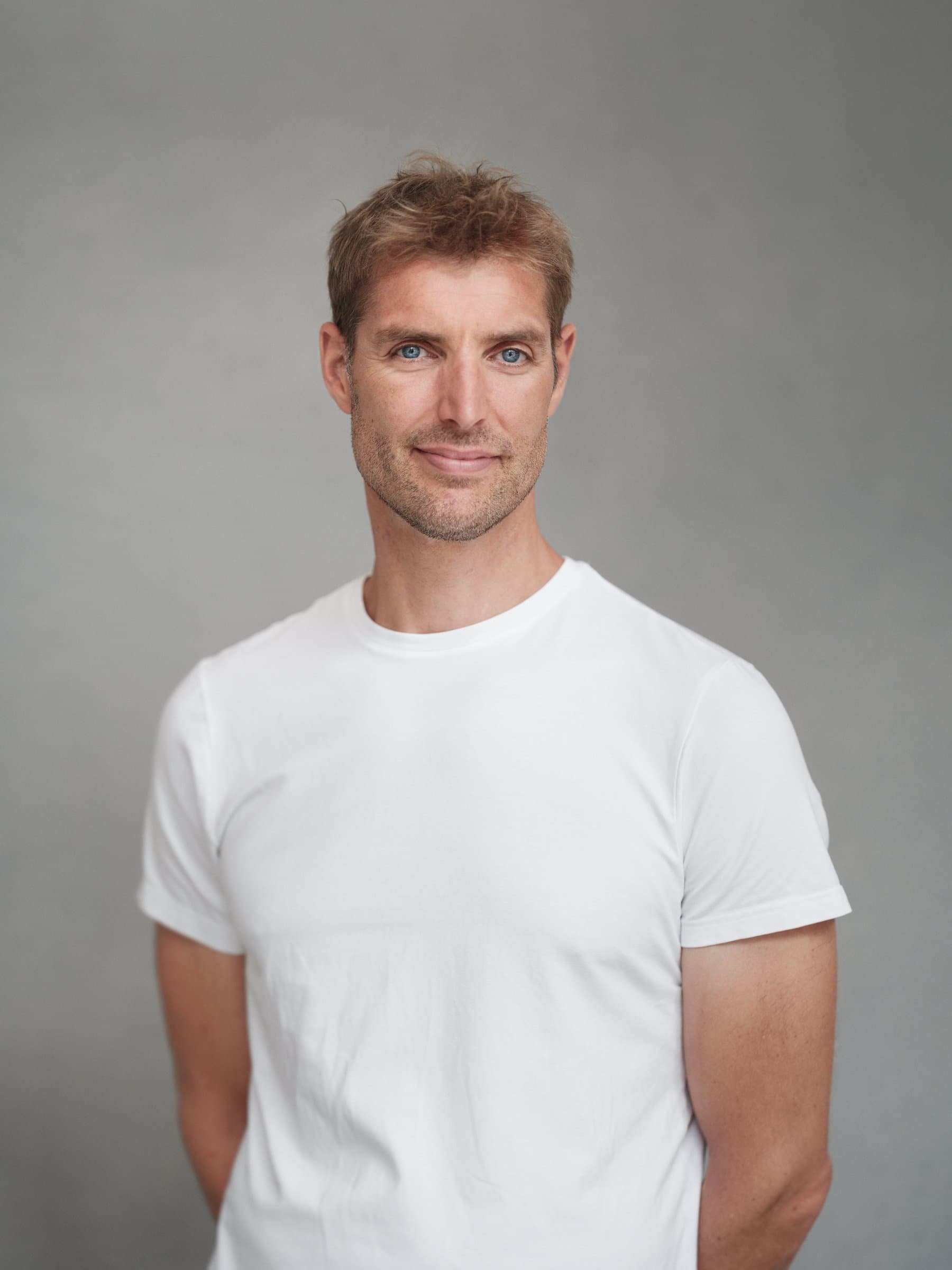
Hyper-responsibility: when you want to save everyone
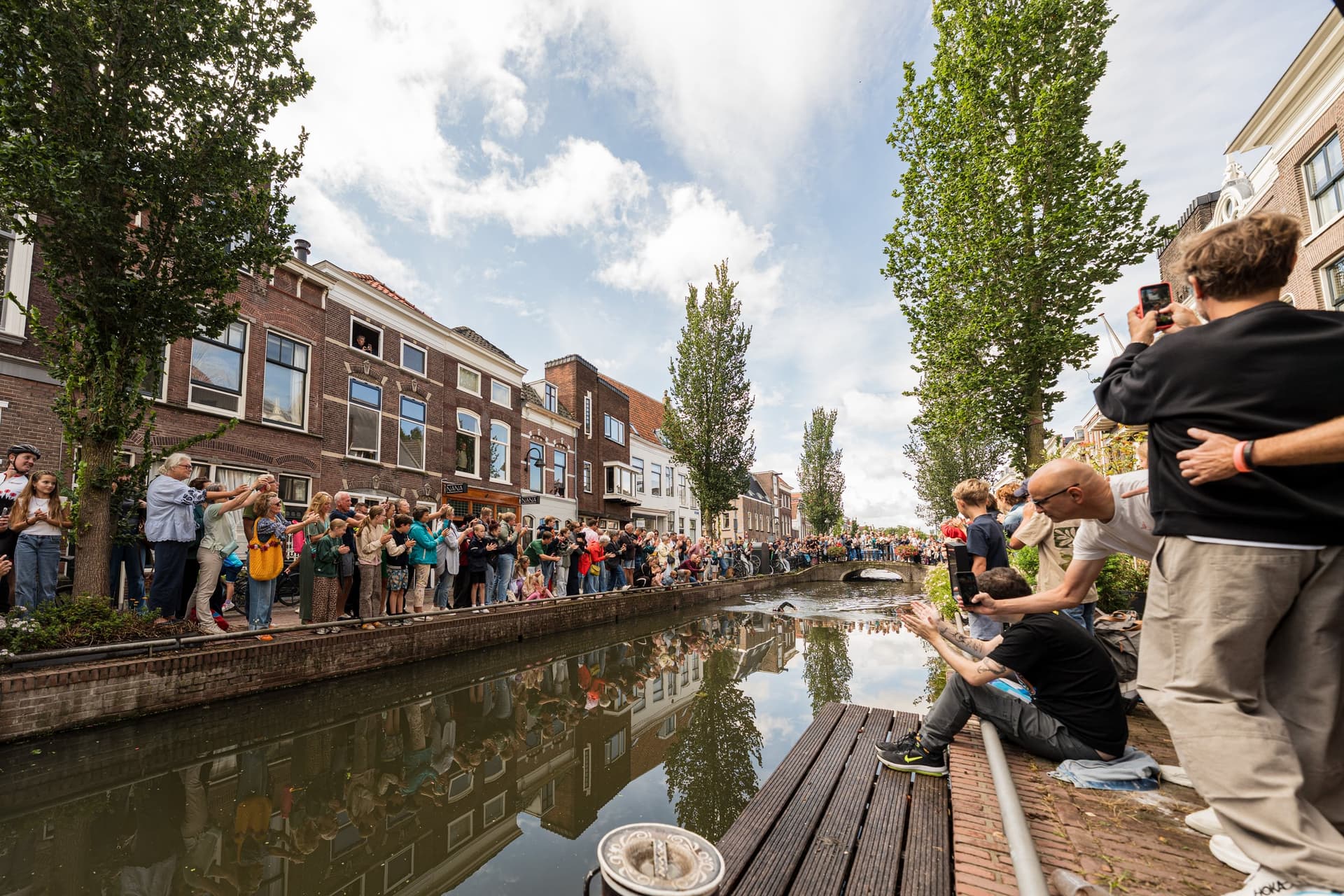
Anyone who leads a business or a team knows the feeling: if it goes wrong, it’s on you. A client who walks away, an employee who gets stuck, a project that stalls. You step in, you fix it, you take over. Taking responsibility is a strength. But when does it become too much?
I know what hyper-responsibility feels like. For years I swam extreme distances to raise money for cancer research. Only while writing my book De laatste slag did I see where that drive came from, and what it cost me.
Where does the feeling that everything rests on your shoulders come from?
In 2001, at nineteen, I was diagnosed with leukaemia. I spent half a year in hospital. The patients on my ward died; I recovered. It didn’t feel fair, and that feeling never fully went away.
Later I found out there is a word for it: survivor guilt. The nagging sense that you owe something because you made it. For me, it became the engine behind my swims along the 200 km Elfstedentocht route in Friesland, the Elfstedentriatlon and the 22-cities swim. Together we raised almost €19 million for cancer research.
In my book I wrote that I felt ‘responsible for making life fair’. As if I had to save other patients.
Add to that my upbringing. My father taught me that I was responsible for my own success. If I just worked hard enough, I could achieve anything. Asking for help felt like weakness. Many business owners recognise this: the idea that success is something you make, and failure is therefore your fault.
How do you recognise hyper-responsibility in yourself?
Hyper-responsibility, or feeling overly responsible, is more than working hard. It is the belief that the outcome depends entirely on you, even when it doesn’t. The signs I recognised in myself:
- You feel guilty when something goes wrong, even if it was beyond your control.
- You take over other people’s problems instead of letting them solve them.
- Stopping is not an option, because you would let others down.
- You don’t dare to say that something is too much for you.
- Success feels mostly like relief, not like joy.
During the Elfstedentriatlon in 2023 I felt it very literally. After half a day of swimming I was already throwing up. I thought of the hundreds of volunteers and the daily broadcasts on national television. My dream suddenly felt like a burden, as if it rested entirely on my shoulders. Read more in Letting go of control as a leader.
What does over-responsibility cost you as a leader?
In sport, my urge to save was a strength. I think it helped me become Olympic champion, because I believed in a bigger goal. But in a team the same urge can chafe. People get no room to carry responsibility themselves. You burn out. And the real cause of a problem stays where it is, because you keep fixing it.
I also saw it with a friend I could not save. My best friend Sebastiaan died of cancer. I would have done anything. I searched for new treatments with him and went to the hospital with him. I carried the guilt about that for a long time, even though I knew rationally that it was out of my hands.
How do you let go of responsibility without becoming indifferent?
Letting go doesn’t mean you stop caring. For me it means: I do what I can, and I am not responsible for the entire outcome. Three things helped me.
Separate influence from outcome. During my leukaemia it helped to know that recovery was a matter of treatment and luck, not willpower. My doctors put it well: they had seen the fittest, most positive patient die and the least fit one recover.
Divide responsibility explicitly. During my swims, the doctor on board guarded the medical limit, not me. That gave me peace of mind. More in How to delegate.
Be kind to yourself. Self-compassion turned out to be the missing step in how I deal with setbacks. Read on in Self-compassion.
In 2026 I swam my last long distance, the 22-cities swim. No longer out of survivor guilt, but because I enjoyed it. When I fell ill near Oudewater, I decided myself to stop. I later wrote: ‘I don’t have to save anyone, I do what I can.’ How I made that decision is in Knowing when to quit.
When does taking responsibility go too far?
Responsibility becomes a burden when you start carrying other people’s responsibility too. Think of the business owner who feels guilty about a redundancy that is economically unavoidable. Or the director who no longer dares to tell anyone how hard it is.
The question I now ask myself: is this mine, or am I making it mine?
Frequently asked questions about hyper-responsibility
What is hyper-responsibility?
The tendency to feel responsible for things that are (partly) outside your control, such as other people’s emotions, choices or results.
What is survivor guilt?
The guilt you can feel when you survived or came through something that others did not. For me it came from recovering from leukaemia.
Is feeling responsible a bad thing?
No. It makes you committed and reliable. It becomes a problem when you place the outcome entirely on yourself and leave no room for others or for bad luck.
Why do I feel responsible for everything at work?
Often it is a mix of commitment, the belief that success is something you make, and the fear of letting others down. For me, survivor guilt came on top of that. People who feel overly responsible at work take over other people’s problems and find it hard to stop or ask for help.
How do you stop wanting to fix everything?
For every problem, ask yourself whose problem it is. Name what you can do and leave the rest with the other person.
On saving, letting go and self-compassion
In my keynote De laatste slag I talk about how resilience shifted for me from pushing through to adjusting, and sometimes stopping. For business owners, leaders and teams who carry a lot. See the keynote or read the full story in my book (in Dutch).