Mental resilience after setbacks
You have a tight plan, your team is ready, and then everything falls over. A reorganisation, a disappointing quarter, something in your private life. That is the moment you find out how resilient you are.
I have learned that resilience does not mean you never fall. It means you know how to get back up. Even when the water is cold and the finish is still a long way off.
What mental resilience is
Resilience is the ability to deal with stress and setbacks and then get back on your feet. Many people see it as a trait you either have or don't. I see it as a muscle. You can train it.
The core is simple. You take control of what you can influence. And you accept that some things are outside your control. An illness. An economic crisis. The weather on the water in Friesland.
Resilience is also discipline. Keeping going on the days when motivation is nowhere to be found. In the long run that matters more than talent.
When I had no control
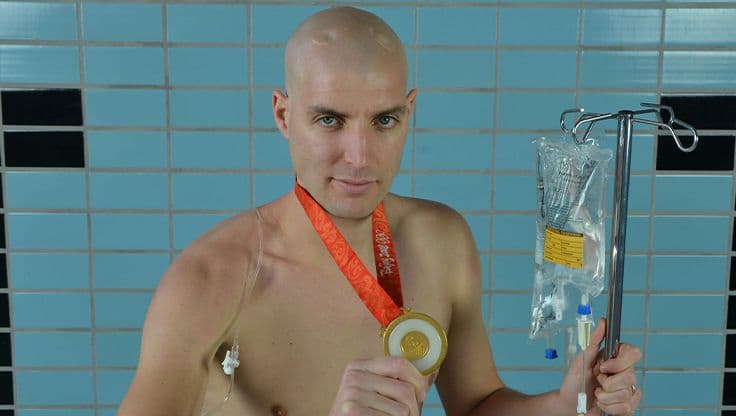
At 19 I was diagnosed with leukaemia. At that moment you have no control over anything. Not over your body, not over the treatment, not over the outcome.
What I learned then: dealing with pressure is not about ignoring the pain. It is about rearranging your goals. Not trying to see the whole road ahead, but taking the next step. I took that lesson with me into swimming. In 2008 I won Olympic gold in the 10 km open water race in Beijing.
Small goals, long distances
Faced with an enormous task, your mind is quickly overwhelmed. A diagnosis. A 200 km swim. A three-year change programme. If you only look at the end, you freeze.
That is why I work with micro-goals. The next metre. The next ten minutes. Every small step that works is a reason to take the next one.
It works the same way in organisations. On long projects or under heavy workloads, a team often stares at the distant end goal. If you shift the focus to pieces you can actually see the end of, you keep going longer. A setback then becomes something to work with, not a final failure.
Giving up in 2018
In 2018 I swam the Elfstedentocht for the first time. I did not reach the finish. My body could not go on. That felt like an enormous failure.
I had two choices. Stay stuck in "I have failed". Or look at what I could learn from it for a next attempt. I chose the second. In 2019 I swam the whole 200 km.
For me that is the core of it. Stop fighting reality and start building a solution. If something doesn't work the first time, you are allowed to try again.
Persevering is not the same as being stubborn, though. Sometimes stopping is the right choice. Resilience also means daring to see that difference.
How to train resilience
You can start today. These are the steps I cover most often in my sessions:
- Set micro-goals. Don't just look at the medal or the annual turnover. Look at the next ten minutes.
- Name what is going wrong. Say out loud what is not working. That creates room to act.
- Look for people who push back. Make sure you have people around you who dare to contradict you and keep you sharp.
- Celebrate small wins. Every metre in the right direction counts.
Resilience is a team effort
After my swimming career I worked as a financial manager at Unilever. There I saw from close up that resilience in a team is linked to safety. A team is only resilient when people can share their doubts and mistakes without being punished for them.
Many companies present resilience as "just keep going". Real resilience starts with acknowledging reality, even when it hurts. As a leader you have to dare to say that things are difficult. That builds trust. Team members then start supporting each other instead of shouting each other down.
That is why in my talks I also talk about my vulnerable moments, like giving up in 2018. Not to impress, but to show that failing is part of growing.
A resilient team builds a safety net, so nobody stands alone during a reorganisation or a crisis. Mental fitness then becomes something you carry together.
Finally
Resilience is not a talent you either have or don't. You build it with small goals, honesty about what goes wrong and people around you who keep you sharp. That is true in the water and in the office.