Dealing with change at work
Change is rarely easy. We often think it is about a new plan, a different role or a new way of working. Really it is about something else. About letting go. About starting again. And about accepting that you don't know what the future looks like.
I have been through that a few times. When I heard at 19 that I had cancer. When I started swimming again and wanted to get back to the top. When I became Olympic champion. And perhaps most of all when my career as an elite athlete came to an end.
Each time I thought I knew what the next step would be. Each time it turned out differently. That changed how I see change. Not as something that happens to you, but as something you learn to deal with. I see that lesson in organisations too. Companies don't change. People change.
Why change is so hard
Organisational change is usually about a reorganisation, a new strategy or a merger. That sounds businesslike. But behind those words are people who want to know what it means for them. Whether their job will stay. Whether they can handle the new work. Whether they still fit in the team.
Resistance is therefore normal. Not because people dislike change, but because nobody likes uncertainty. When clarity disappears, we look for something to hold on to.
I saw that in myself too. When I was no longer an elite athlete, I had to rediscover what drove me. That took time. The same goes for employees in the middle of a change process.
Three kinds of change
Reorganisations, mergers and takeovers
A reorganisation can make sense from the boardroom and feel very different on the shop floor. People say goodbye to colleagues, teams are put together differently, responsibilities shift. That takes more than a new organisation chart. It takes trust.
New ways of working
New technology, artificial intelligence and hybrid working are changing jobs. That requires new knowledge and the willingness to learn again. Learning again also means accepting that you are not yet good at something. That stays hard for everyone.
Change after a crisis
Some changes you don't choose. An economic crisis. An unexpected event. A personal loss in the team. That is when it becomes clear how important resilience is. Not because everyone has to stay positive, but because together you look for a new way to carry on.
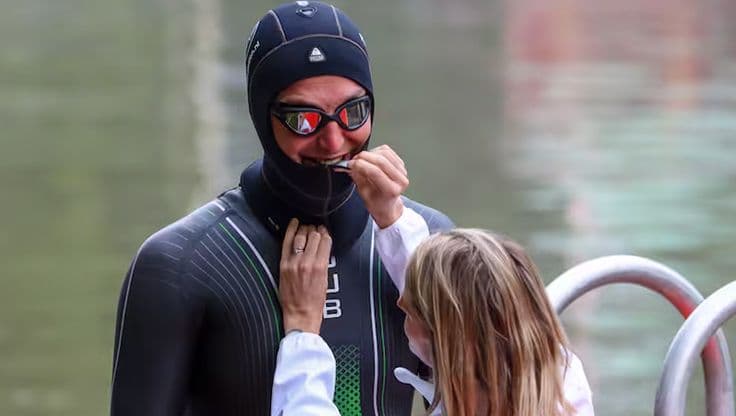
During the Elfstedentocht swims almost nothing went to plan. My body wanted to stop, the weather was against us, conditions changed. Then there is no point clinging to the original plan. You accept what is there and look at what is still possible.
What I learned about change as an elite athlete
People think elite sport is about winning. For me it was mostly about dealing with everything that did not go to plan.
After the Olympic Games I thought for a long time that swimming would remain my life. Until I had to accept that that period was over. That felt strange. For years you work towards one goal and then it disappears.
I discovered that your identity should not depend on what you do, but on who you are. I see that in organisations too. A role can change. A department can disappear. People's qualities do not disappear.
Later I wanted to do something meaningful again. That became the Elfstedentocht swim for cancer research. I could only take that step because I let go of what lay behind me. Only then was there room for something new. The same applies to organisations. As long as everyone holds on to how things used to be, nobody looks ahead.
From sport to organisation
In sport you learn that you cannot control everything. You prepare well and train hard, and still something happens that you did not see coming. Organisations are no different.
The teams that deal best with change usually do not have the perfect plan. They are the teams that keep helping each other when the plan no longer adds up. That takes trust and openness. And sometimes admitting that nobody has all the answers.
What an outside speaker adds
After a reorganisation a lot has usually been said already. By managers, by the board, by HR. A personal story from someone outside sometimes lands differently. Not because that speaker has better answers, but because he is not part of the organisation. No internal history, no politics, no stake.
In my talks I don't tell an organisation how it should change. I tell how I learned to deal with change myself. About disappointments, new goals and working together when nobody knows what the next step looks like. People often tell me afterwards that they recognised themselves, even though they work far away from elite sport.
I believe people remember stories better than models. Doubt, uncertainty, perseverance, working together: those are not management terms but human experiences. A good talk is therefore not about the person on stage, but about the people in the room. The aim is not for them to think that what I went through is special. The aim is for them to think: that is how it feels for us too.
When a keynote on change helps
A talk works best at a moment when an organisation wants to look ahead. After a reorganisation. At a kick-off or management day. Or when a team wants to rebuild trust.
A talk does not solve problems. A good story does help people find the same starting point. That is often where real change begins.